
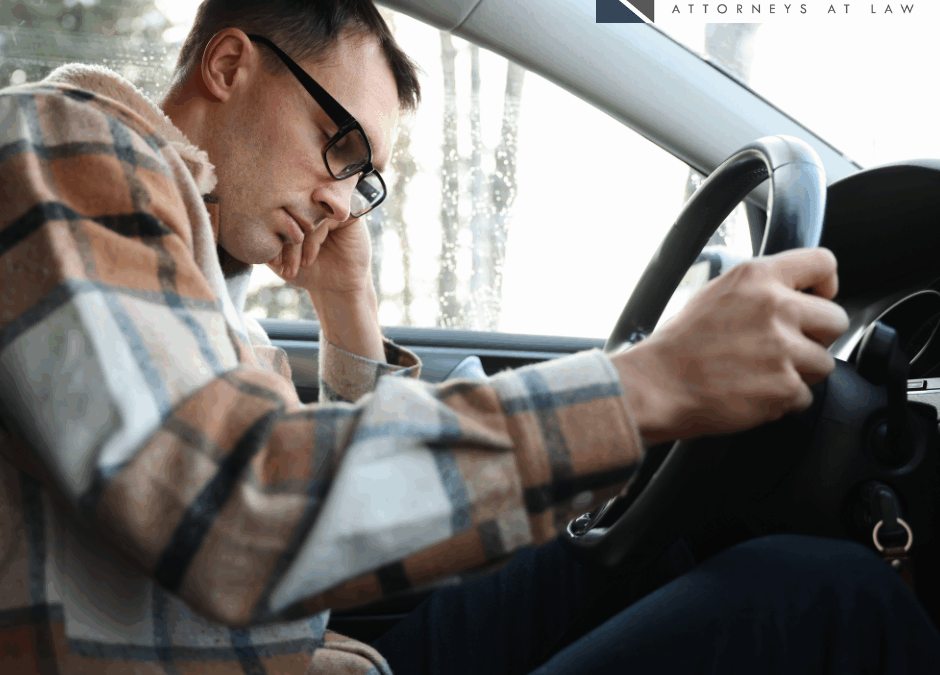
Getting behind the wheel is a daily routine for most of us in Kentucky. Whether you’re commuting on I-65 in Louisville, making a long haul on I-75, or just running errands, you trust that other drivers are alert and focused. Unfortunately, that isn’t always the case. Fatigued driving is a serious and often overlooked danger on our roads, with consequences just as devastating as drunk driving.
This guide explains the risks of drowsy driving, how to recognize the warning signs, and what steps you can take to protect yourself and others. We will also cover what to do if you are involved in a crash caused by a tired driver and how a personal injury attorney can help you navigate the aftermath.
What Is Drowsy Driving and Why Is It So Dangerous?
Drowsy driving is the act of operating a motor vehicle while feeling sleepy or fatigued. This state impairs your driving abilities in several critical ways. It slows your reaction time, reduces your awareness of hazards, and harms your judgment. In severe cases, a driver can experience a “microsleep”—a brief, involuntary episode of sleep that can last for a few seconds. At highway speeds, a car can travel the length of a football field during a microsleep, often with catastrophic results.
Nationally, thousands of crashes, injuries, and fatalities are linked to drowsy driving each year. For Kentucky drivers, especially those who travel long distances on our interstates or work non-traditional hours, the risk is significant. Fatigued driving puts everyone on the road in danger, from truckers on I-64 to parents driving their kids to school in Jefferson County.
Common Causes of Fatigued Driving
Understanding what causes driver fatigue is the first step toward prevention. Several factors can contribute to a driver being too tired to operate a vehicle safely.
Sleep Deprivation and Sleep Debt
Most adults need 7-9 hours of quality sleep per night. Consistently getting less than that builds up a “sleep debt,” making you more prone to drowsiness during the day. Shift workers, new parents, and students are particularly vulnerable.
Untreated Sleep Disorders
Conditions like sleep apnea, narcolepsy, and restless legs syndrome can severely disrupt sleep quality, even if you think you’re getting enough hours in bed. These disorders can cause excessive daytime sleepiness, making driving extremely hazardous.
Medications and Alcohol
Many over-the-counter and prescription medications can cause drowsiness as a side effect. Always read warning labels and talk to your doctor or pharmacist about how a medication might affect your ability to drive. Combining alcohol with even minor fatigue is a recipe for disaster, as it amplifies sleepiness and further impairs judgment.
Demanding Work and Driving Schedules
Long work shifts, especially overnight or rotating shifts, disrupt the body’s natural sleep-wake cycle. Commercial truck drivers and anyone driving for extended periods without adequate breaks are at a high risk for fatigue-related crashes.
Warning Signs of Drowsy Driving
Recognizing the signs of fatigue in yourself and others is key to preventing an accident. If you experience any of these symptoms, you are too tired to drive safely.
- Frequent yawning or blinking
- Difficulty remembering the last few miles driven
- Missing your exit or a turn
- Drifting from your lane or hitting a rumble strip
- Feeling restless, irritable, or unfocused
- Heavy eyelids or trouble keeping your head up
If you notice another driver exhibiting these behaviors—such as weaving, driving at inconsistent speeds, or drifting onto the shoulder—keep a safe distance.
Evidence-Based Drowsy Driving Prevention Tips
The only true cure for fatigue is sleep. Relying on short-term fixes like caffeine or rolling down the window is not a sustainable or safe strategy. Here are practical, evidence-based tips to ensure you are well-rested before you drive.
- Prioritize Sleep Hygiene: Make sleep a non-negotiable part of your routine. Aim for 7-9 hours of sleep per night in a dark, quiet, and cool room.
- Plan Your Trips: For long drives, schedule a break every 100 miles or every two hours. Plan to drive during times when you are normally awake and avoid driving late at night if possible.
- Travel with a Companion: On long trips, an alert passenger can share the driving and help identify signs of fatigue.
- Use Caffeine Wisely: A cup of coffee can provide a short-term boost, but it takes about 30 minutes to take effect and is not a substitute for sleep. Do not rely on it as your only solution.
- Know Your Vehicle’s Safety Features: Many modern cars are equipped with lane-departure warnings or driver-attention alerts. While helpful, these are backup systems and should not replace responsible decision-making.
What to Do If You Feel Drowsy While Driving
If you find yourself becoming tired behind the wheel, your top priority is to get off the road as soon as it is safe to do so.
- Pull Over: Find a safe, well-lit place like a rest stop, gas station, or parking lot.
- Take a Nap: A 20-45 minute nap can significantly improve alertness. Be sure to lock your doors.
- Wait It Out: After your nap, give yourself a few minutes to become fully awake before you start driving again.
- Re-evaluate Your Trip: If you are still tired, it is safer to find overnight lodging or call someone for a ride than to risk continuing your journey.
Steps to Take After a Drowsy Driving Crash
If you are in an accident and suspect the other driver was fatigued, the steps you take immediately after can protect your health and your legal rights.
- Seek Medical Attention: Your first priority is your health. Call 911 and get checked by a medical professional, even if you feel fine. Some injuries may not be immediately apparent.
- Report the Accident: File a police report. Tell the responding officer exactly what you observed about the other driver’s behavior before the crash (e.g., swerving, drifting).
- Document Everything: Take photos and videos of the scene, vehicle damage, and any visible injuries. Get contact information from the other driver and any witnesses. Write down your recollection of events as soon as possible.
- Report to Your Insurance Company: Inform your insurer about the accident, sticking to the facts.
- Do Not Admit Fault: Avoid discussing fault at the scene or giving a recorded statement to the other driver’s insurance company without first seeking legal advice.
How a Louisville Drowsy Driving Accident Lawyer Can Help
Proving that a driver was fatigued can be complex, but an experienced personal injury attorney can build a strong case on your behalf. A lawyer can help by:
- Conducting a Thorough Investigation: We can obtain police reports, interview witnesses, and gather evidence like logbooks for commercial drivers or electronic data from the vehicle.
- Proving Negligence: We work to demonstrate that the driver was negligent by choosing to operate their vehicle while impaired by fatigue.
- Handling Insurance Companies: We will manage all communications with insurers, protecting you from tactics designed to minimize your claim.
- Calculating Your Damages: We help you pursue fair compensation for medical bills, lost wages, pain and suffering, and other damages resulting from the crash.
Frequently Asked Questions (FAQs)
Q: Is drowsy driving illegal in Kentucky?
A: While Kentucky does not have a specific law criminalizing “drowsy driving,” a driver who causes a crash due to fatigue can be cited for reckless driving or other traffic violations. They can also be held financially liable for the damages they cause in a civil lawsuit.
Q: How can you prove the other driver was asleep or tired?
A: Evidence can include witness testimony, the driver’s own admission, a lack of skid marks at the scene (suggesting they didn’t brake), and, for commercial drivers, violations of hours-of-service regulations.
Q: Can I still file a claim if I was partially at fault?
A: Yes. Kentucky follows a “pure comparative fault” rule. This means you can recover damages even if you were partially responsible, but your compensation will be reduced by your percentage of fault.
Q: What if the drowsy driver was operating a company vehicle?
A: In cases involving commercial drivers (like truckers or delivery drivers), their employer may also be held liable for the accident, especially if they encouraged or allowed the driver to violate safety rules.
Q: How much does it cost to hire a drowsy driving accident lawyer in Louisville?
A: Most personal injury law firms, including ours, work on a contingency fee basis. This means you pay no upfront fees, and we only get paid if we successfully recover compensation for you.
Injured in a Crash? We Can Help.
If you or a loved one has been injured in an accident caused by a fatigued driver, you deserve justice and fair compensation. Navigating the legal system while recovering from an injury can be overwhelming. Our dedicated team is here to support clients in Louisville, Jefferson County, and the surrounding areas.
Contact us today for a free, no-obligation consultation to discuss your case and learn how we can help you move forward.